
Sub-Total: $0.00
Tax Lien Investing for Beginners: Is It a Good Starting Point?

Choosing your first investment strategy can be challenging. You may have limited capital, a full-time job, family responsibilities, or simply need more time to understand the available options.
When I began exploring investing, I wanted to find strategies that fit my financial situation, schedule, and long-term goals. Real estate tax lien and tax deed investing eventually became part of that learning journey.
However, these strategies are not interchangeable, and neither is automatically a good fit for every beginner. Tax lien certificates, in particular, generally represent a claim associated with unpaid property taxes—not immediate ownership of the underlying property. The rights, potential returns, deadlines, and legal procedures depend on the jurisdiction.
In this guide, I’ll explain how I became interested in tax lien investing, what makes the strategy worth researching, what beginners need to understand before bidding, and how to decide whether it fits their circumstances.
My Personal Experience: Learning to Set Financial Goals
My interest in financial independence began long before I purchased my first investment.
As a child, I learned that if I wanted something beyond what was immediately available, I needed to create a plan to work toward it. My family had a limited budget for back-to-school shopping, so I began finding ways to earn money through babysitting, mowing lawns, delivering newspapers, shoveling snow, and raking leaves.
I learned to set a savings target, estimate how long it would take to reach it, and fit the work into my existing schedule. Those early lessons helped me understand the connection between earning, planning, and achieving a financial goal.
That approach followed me into adulthood.
In my late teens, I started reading about investing, entrepreneurship, stocks, and real estate. I was curious about different ways to build wealth, but I also needed to be realistic about the amount of money I could commit.
The lesson was not that one investment strategy was automatically better than another. It was that I needed to understand the options, identify what I could afford, and find a strategy that fit my responsibilities and tolerance for risk.
How I Discovered Tax Lien and Tax Deed Investing
As I researched real estate investing, I came across education about tax lien certificates and tax deed auctions.
The idea interested me because tax sales offered a different process from buying a property through a traditional real estate transaction. Some jurisdictions sell claims associated with delinquent property taxes, while others use a tax-sale process that can lead to the purchase of the property itself.
I began studying the differences, researching auction procedures, and learning about the due diligence required before bidding.
At the time, I was working full-time in logistics and operations management. My career involved demanding responsibilities and the possibility of relocating, so I was looking for investment activities I could research and prepare for around my existing schedule.
Online auction access was appealing, but it did not eliminate the work. Understanding the local rules, reviewing available property information, confirming registration requirements, and deciding what not to bid on all required preparation.
My experience taught me that an investment strategy needs to fit more than a person’s available money. It also needs to fit their knowledge, available time, financial obligations, and ability to handle unexpected outcomes.
What Is Tax Lien Investing?

Tax lien investing generally involves purchasing a certificate or claim associated with unpaid property taxes through a process authorized by state or local law.
When a property owner fails to pay property taxes, the responsible government authority may take steps to collect the delinquent amount. In jurisdictions that sell tax lien certificates, eligible investors may be able to purchase a certificate tied to that debt.
If the owner redeems the certificate, the investor may receive the amounts permitted by law, potentially including interest. If the lien is not redeemed, the certificate holder may have additional legal remedies, subject to the jurisdiction’s requirements.
There is an important distinction: purchasing a tax lien certificate does not ordinarily transfer immediate ownership of the property.
Before considering a tax lien investment, understand the rules governing the specific sale, including the bidding method, allowable interest, redemption period, notice requirements, deadlines, and any further legal proceedings.
For example, official county guidance in Colorado and Florida explicitly distinguishes purchasing a tax lien certificate from purchasing the property itself. The details differ by jurisdiction, so always check the responsible local authority’s current rules.
Tax Lien Investing vs. Tax Deed Investing
Although the terms are sometimes used together, tax lien investing and tax deed investing can involve very different rights and financial outcomes.
Tax lien certificate investing
With a tax lien certificate, you generally purchase a claim associated with delinquent property taxes. The potential outcome may involve receiving repayment with interest or pursuing additional remedies if the owner does not redeem, where the law allows it.
You must understand the certificate’s terms, the auction’s bidding rules, the amount of capital at risk, and the legal process that applies if the lien remains unpaid.
Tax deed investing
With a tax deed sale, the process may involve bidding on the property itself or acquiring an interest that can result in ownership under the applicable law.
That does not mean the property is automatically free of every title problem, legal claim, occupancy issue, or other complication. The sale terms and governing law determine what the purchaser receives and what must happen next.
Why the distinction matters
A tax lien certificate should not be evaluated as if it were already a deed to a property. Likewise, a tax deed acquisition should be analyzed as a potential property purchase, including the relevant title, condition, cost, and exit considerations.
If you are new to this field, learn the process in one jurisdiction before assuming the same rules apply elsewhere.
Why Tax Lien Investing May Appeal to Some Beginners

Tax lien investing can be interesting to people who want to research real estate-related opportunities without starting with a conventional rental property purchase. However, the appeal should be evaluated alongside the risks and requirements.
1. You can study opportunities before committing capital
Many jurisdictions publish auction information or provide online access to sale records. That can allow prospective investors to learn about the process and research available information before deciding whether to participate.
Availability of information does not mean every property or certificate is a suitable investment. The amount of information available also varies by location.
2. The process may fit some busy schedules
Investors who work full-time may appreciate being able to research auction documents and prepare in advance. However, deadlines, registration requirements, payment rules, and subsequent legal obligations can still require substantial attention.
Do not assume that an investment is passive simply because the auction is online.
3. It introduces investors to public property records
Researching tax sales can help investors become familiar with parcel identification numbers, assessor records, GIS maps, recorded documents, title questions, and local government processes.
These research skills can also be useful when evaluating other real estate opportunities.
4. It provides a structured way to evaluate a specific opportunity
An investor can develop a repeatable process for checking the rules, researching a parcel, estimating costs, and setting a maximum bid. That process encourages decisions based on documented information rather than excitement about a low opening bid.
Important: Tax lien investing is not guaranteed to offer low-cost property ownership or a particular rate of return. Whether it makes sense depends on the specific certificate or sale, local law, costs, and your financial circumstances.
Is Tax Lien Investing a Good Starting Point for You?
Before committing money, evaluate whether the strategy aligns with your situation.
Your available capital
Consider how much money you can commit without interfering with emergency savings, essential expenses, debt obligations, or other financial goals.
The opening bid is not necessarily the total cost. Deposits, auction premiums, legal work, title research, additional taxes, and other expenses may affect the amount of capital required.
Your available time
Consider the time needed to research the opportunity before bidding and manage the investment afterward.
A full-time job does not automatically prevent participation, but the process may involve firm deadlines, detailed records, and legal follow-up.
Your knowledge of the local rules
You should be able to explain what you are buying, what happens if the owner redeems, what happens if the owner does not redeem, and which deadlines apply.
If you cannot answer these questions for the specific jurisdiction, continue researching before bidding.
Your risk tolerance
You may encounter uncertain timelines, title issues, legal complications, unexpected costs, or outcomes that differ from your initial expectations.
Do not commit money you cannot afford to have tied up or potentially lose.
Your intended outcome
Ask yourself what you are trying to accomplish. Are you learning about real estate investing? Seeking potential interest income from a certificate? Evaluating a possible property acquisition? These are different objectives and require different analyses.
A clear objective makes it easier to decide which opportunities are worth researching—and which ones to avoid.
How to Research a Tax Lien or Tax Deed Opportunity
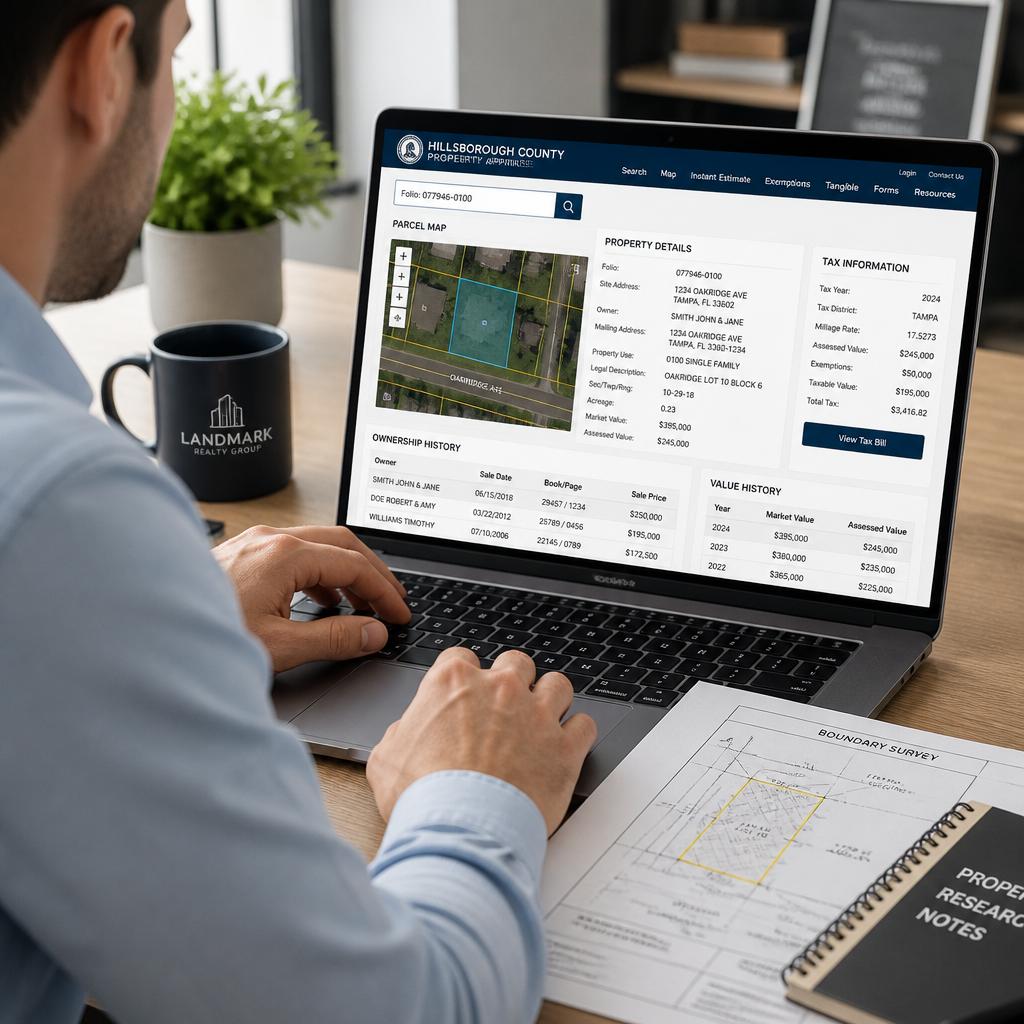
Before bidding, build a repeatable due diligence process.
Step 1: Find the official sale information
Start with the responsible county, municipality, tax collector, treasurer, or other government authority. Confirm the auction date, registration process, payment requirements, sale type, and current rules.
Third-party auction websites can help you discover opportunities, but verify the details with the official source.
Step 2: Confirm the parcel and legal description
Record the parcel identification number and compare it with the official assessor’s records, GIS map, and available legal documents.
Do not rely only on a street address or a brief auction description.
Step 3: Research title and potential legal complications
Review available recorded documents and seek qualified title or legal assistance where appropriate. Investigate whether mortgages, judgments, municipal claims, easements, bankruptcy issues, or other interests could affect the investment.
Do not assume a tax sale removes every existing claim or title issue.
Step 4: Evaluate location and property characteristics
When relevant, research access, zoning, permitted use, parcel boundaries, flood exposure, environmental concerns, occupancy indicators, and the property’s physical condition.
A map or drive-by inspection is only an initial screening step. It does not replace a survey, title review, authorized inspection, or professional assessment where one is needed.
Step 5: Understand the auction’s financial terms
Confirm the bidding format, interest or penalty rules, redemption process, deposits, fees, payment deadlines, and any additional requirements.
A high advertised interest rate does not guarantee a high realized return. The outcome depends on the rules, the bid, the amount invested, the time until redemption, and the expenses that apply.
Step 6: Decide your maximum bid before the auction
Set a limit based on the terms of the investment and the risks you have identified. Do not let competition push you beyond your planned amount.
For a lien certificate, analyze the potential certificate-related outcomes. For a tax deed, evaluate the property as an acquisition, including realistic value, title and condition risks, costs, and your intended exit strategy.
If the opportunity only appears attractive under optimistic assumptions, be prepared to pass.
For a more detailed list of research resources, see 12 Tax Lien and Tax Deed Auction Websites.
What Are the Risks of Tax Lien Investing?
Tax lien investing involves financial and legal risks that beginners should understand before participating.
- Different local laws: Interest, bidding methods, redemption periods, deadlines, and legal remedies vary by jurisdiction.
- Uncertain realized returns: An advertised rate is not a guarantee of the return you will actually receive.
- Potential title or legal issues: Additional claims, bankruptcy, notice requirements, or court proceedings may complicate the process.
- Property-related risks: The underlying property may have access, zoning, condition, environmental, or occupancy problems.
- Delayed access to capital: Your funds may be tied up longer than expected.
- No guaranteed ownership: A lien certificate does not ordinarily provide immediate ownership of the property.
- Additional expenses: Legal, administrative, research, and other costs may affect the outcome.
The appropriate response to these risks is not to assume the worst or the best. It is to investigate the specific opportunity, understand the rules, and decide whether the potential outcomes fit your financial situation.
Common Mistakes to Avoid
Beginners should be particularly careful to avoid these mistakes:
- Assuming tax liens and tax deeds are the same investment.
- Believing that a low opening bid guarantees a bargain.
- Relying on a headline interest rate without analyzing the auction’s terms.
- Skipping title, parcel, access, or zoning research.
- Assuming that a property will automatically become theirs if a lien is not redeemed.
- Overlooking registration and payment deadlines.
- Committing funds needed for essential expenses.
- Bidding without a maximum price and a clear understanding of the possible outcomes.
You do not need to win every auction to become a more informed investor. Sometimes the most valuable decision is recognizing that an opportunity has too many unknowns.
Frequently Asked Questions
Can beginners invest in tax liens?
Beginners can learn about tax lien investing, but they should understand the local rules, certificate terms, potential costs, and risks before committing capital. Studying official auction documents and practicing due diligence can help build a foundation.
Do tax liens give you ownership of a property?
A tax lien certificate generally represents a claim associated with delinquent taxes, not immediate property ownership. Any later path to ownership depends on the jurisdiction and completion of the required legal process.
Can tax lien investing generate income?
A redeemed certificate may provide interest or other amounts allowed by law. However, the amount and timing are not guaranteed, and expenses, auction terms, and legal complications can affect the result.
Is tax lien investing a passive investment?
Not necessarily. Research, registration, payment deadlines, recordkeeping, and possible legal follow-up can require significant work. The responsibilities depend on the certificate, sale, and jurisdiction.
How much money do you need to start?
There is no universal minimum. Auction rules, opening bids, deposits, premiums, and additional costs vary. Determine the total capital you could need for the specific sale before deciding whether it is affordable.
Where can I find tax lien and tax deed auctions?
Start with the official website of the government agency responsible for the sale. You can also review 12 Tax Lien and Tax Deed Auction Websites as a discovery resource, then verify the current rules and listings directly with the relevant authority.
Choose an Investment Strategy That Fits Your Goals
My biggest lesson from exploring investing was that the strategy needs to fit the person—not just sound attractive on paper.
Consider your available capital, time, knowledge, financial responsibilities, and tolerance for risk. Learn the process before committing money, and evaluate each opportunity using its actual terms rather than a promised outcome.
If you are also exploring traditional real estate investments, InvestingTE provides tools and educational resources to help you analyze rental property assumptions, cash flow, and investment performance.
- How to Analyze a Rental Property
- How to Calculate Rental Property Cash Flow
- How to Calculate Cash-on-Cash Return
- 12 Tax Lien and Tax Deed Auction Websites
- Explore InvestingTE’s Investment Tools
Use rental-property calculators to evaluate rental-property assumptions; they do not replace a jurisdiction-specific analysis of a tax lien certificate or tax deed.
Educational disclaimer: This article provides general educational information and is not legal, tax, financial, or investment advice. Tax-sale procedures and investor rights vary by jurisdiction and can change. Verify current requirements with the responsible government authority and consult qualified professionals before bidding or pursuing legal remedies. Investments involve risk, and no return or outcome is guaranteed.
Sample References: Boulder County — Tax Lien Sale FAQs. This official source explains that a tax lien purchase is not a purchase of the property and outlines relevant risks.
Miami-Dade County Tax Collector — Tax Certificate Sale Disclaimers. Useful for discussing due diligence, title, property-condition, and ownership risks.
FREE Deal Analysis for Rental Property Calculator!
Our mission is to help others develop using our tools and educational information.
Explore our tools, education and services.