
Sub-Total: $0.00
How to Find Trending Real Estate Locations
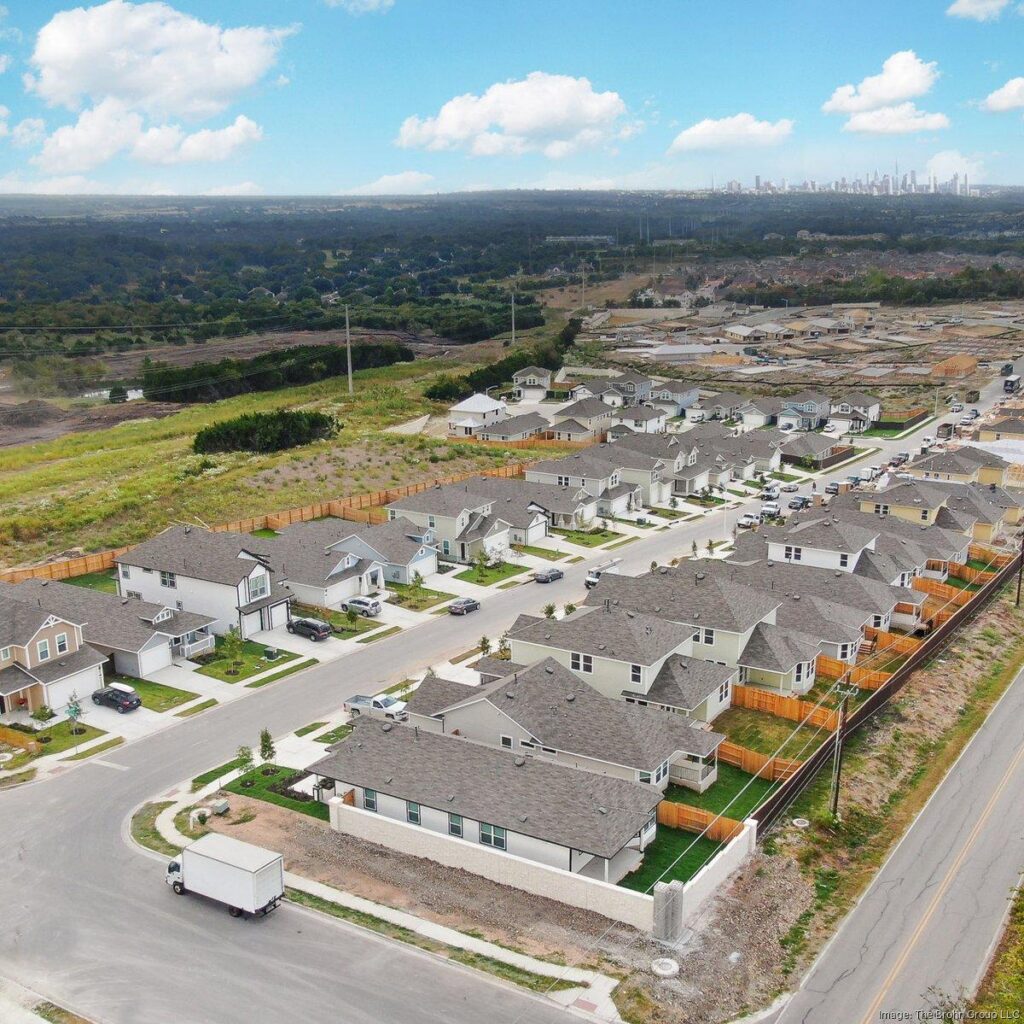
Finding trending real estate locations starts with understanding where demand, employment, housing activity, and property values are changing. Instead of relying only on headlines about popular cities, investors can compare smaller geographic areas to identify locations that deserve further research.
A citywide average may hide important differences between neighborhoods. One area may be attracting new businesses and residents, while another has stagnant demand or an oversupply of housing. Examining ZIP-code-level data can help narrow the search, but the results must be verified with reliable sources and property-level analysis.
In this guide, you’ll learn how to identify potential real estate investment locations, organize the data in a spreadsheet, compare markets, and evaluate whether the properties in those areas fit your investment strategy.
Learn more with our article How to Evaluate Emerging Markets in Real Estate.
What Makes a Real Estate Location Trend Worth Investigating?
A trending location is an area where several indicators suggest that demand, economic activity, or real estate market conditions are changing.
Potential indicators include:
- Population and household growth.
- Employment and wage trends.
- Changes in home values and completed sales.
- Rental demand and vacancy.
- New construction and housing supply.
- Infrastructure improvements and verified development projects.
- Affordability, property taxes, and other operating costs.
No single metric proves that a location is a good investment. Rising home values, for example, may reflect stronger demand, limited supply, or a change in the types of properties being sold. Population growth may support housing demand, but new construction can absorb that demand.
The objective is to find locations with multiple supporting indicators, investigate the reasons behind those trends, and determine whether an individual property offers an acceptable potential return.
Step 1: Define the Market You Want to Research
Start with a geographic area that makes sense for your investment strategy. You might select a city, metropolitan area, county, or group of ZIP codes.
If you plan to invest in long-term rentals, focus on areas where achievable rents, employment, household demand, and operating costs support your financial requirements. If you plan to renovate and resell properties, emphasize comparable sales, resale demand, renovation costs, and the availability of buyers.
Avoid starting with an unlimited national search. Narrowing the geography makes it easier to verify data, compare locations consistently, and research individual properties.
Step 2: Identify ZIP Codes or Comparable Geographic Areas
A useful starting point is to identify the ZIP codes within a city or region you want to research.
The USPS ZIP Code Lookup tool can help you identify mailing ZIP codes by city and state. However, remember that mailing ZIP codes and Census ZIP Code Tabulation Areas (ZCTAs) are not always identical.
For demographic comparisons, use the geographic units associated with the source data. For real estate analysis, supplement ZIP-code statistics with neighborhood-level information and comparable property sales.
Create a spreadsheet with one row per geographic area. Include the geography’s name, data source, reporting year, and date you collected the information.
A spreadsheet is useful because it lets you compare locations side by side and update the analysis as new information becomes available.
Learn more with our article How to Calculate Rental Proprty Cash Flow.
Step 3: Collect the Core Market Indicators

Begin with a manageable set of indicators. Expand the spreadsheet only when additional information helps you make a better investment decision.
Population and Household Growth
Collect population estimates for recent years and, where reliable data is available, historical periods such as five or ten years earlier.
Also investigate household growth. The number of households can provide additional context because housing demand depends on how many separate households need places to live, not just the number of people in a region.
Compare each area with its county or metropolitan region. Determine whether growth is sustained, concentrated in a particular period, or influenced by changes in the geographic boundaries or data methodology.
Learn more with our article How to Identify a Path of Progress in Real Estate.
Employment and Income
Research employment trends, wage levels, industry diversity, and local household income.
Growing employment may support housing demand, but consider the types of jobs being created and whether wages are sufficient to support local housing costs. A location dependent on one employer or industry may face greater risk if that sector contracts.
Use consistent geographies and time periods when comparing locations.
Home Values and Comparable Sales
Record recent home-value estimates and compare them with historical data when available. Also examine actual completed sales of similar properties.
Median values and price indexes can help identify broad trends, but they do not necessarily show how much a comparable individual property has appreciated. Changes in the types of homes sold can affect median prices.
Consider the number of sales, property condition, home size, and local inventory before interpreting an increase as a strong market signal.
Learn more with our article How to Anayze a Rental Property.
Rental Demand and Housing Supply
If you’re evaluating rental properties, compare achievable rents, vacancy estimates, leasing activity, and competing rental inventory.
Research new apartment construction, proposed residential developments, and homes being added to the rental market. Additional supply can meet unmet demand, but it may also increase competition and limit future rent growth.
Infrastructure and Development
Investigate approved road improvements, transit projects, utility expansions, zoning changes, and residential or commercial developments.
Confirm whether each project is proposed, approved, funded, under construction, or completed. Do not assume that a public announcement will result in a completed project or increased property values.
Step 4: Find Reliable Sources for the Data
Use primary sources wherever possible and cross-check important figures.
- U.S. Census Bureau: Population, household, demographic, and income information at Census.gov.
- U.S. Bureau of Labor Statistics: Employment, wage, and industry data at BLS.gov.
- USPS: Mailing ZIP-code lookup at USPS.com.
- Local planning departments: Zoning, building permits, development applications, and planning documents.
- County and municipal records: Property assessments, tax information, permits, and public improvement plans.
- Local real estate market data: Completed sales, rental listings, inventory, and other market indicators.
- FEMA Flood Map Service Center: Flood-map research for property-specific due diligence.
City-Data and other secondary websites may provide a convenient starting point, but check the original source, reporting date, geographic definition, and methodology before relying on a figure.
Not every data source is updated at the same frequency. Record the date and source for each important data point so you can distinguish a recent trend from an older estimate.
Step 5: Build a Real Estate Market Spreadsheet
Organize the information in a consistent format. A practical starting spreadsheet might include the following columns:
| Column | What to record |
|---|---|
| Location | ZIP code, ZCTA, neighborhood, or other defined geography |
| Data year | Year associated with the statistic |
| Population | Latest comparable population estimate |
| Prior population | Population from the selected historical period |
| Household growth | Change in household count, where available |
| Employment trend | Comparable employment measure and period |
| Income trend | Household income or wage measure and period |
| Home-value trend | Comparable home-value measure and period |
| Recent sales | Number of comparable sales and relevant price measures |
| Rental demand | Achievable rents, vacancy, and competing supply |
| New development | Verified projects and their status |
| Operating costs | Property taxes, insurance considerations, and other local costs |
| Data notes | Source, date, limitations, and items needing verification |
Do not fill missing fields with guesses. Mark unavailable data clearly and avoid treating locations with incomplete information as directly comparable to those with stronger evidence.
Step 6: Calculate Percentage Changes Correctly
Percentage change can help you compare growth over different periods, but the calculation must use comparable measurements.
The formula is:
Percentage change = ((Current value − Previous value) ÷ Previous value) × 100
For example, if a location’s population increased from 20,000 to 22,000, the percentage change is:
((22,000 − 20,000) ÷ 20,000) × 100 = 10%.
In Excel, if the previous population is in cell B2 and the current population is in cell C2, enter:
=IFERROR((C2-B2)/B2,"")
Format the cell as a percentage.
Use the same formula for comparable home-value measures. Make sure the earlier and current figures cover the same geography and use compatible definitions.
Important considerations:
- Do not divide by zero or treat missing values as zero.
- Use comparable time periods for every location.
- Distinguish nominal home-value growth from inflation-adjusted growth.
- Avoid comparing a five-year change in one area with a ten-year change in another.
- Consider annualized growth rates when periods differ and the underlying data supports the comparison.
A larger percentage change does not automatically mean a better investment. Small starting values, limited transactions, and unusually strong years can produce misleading results.
Step 7: Rank Locations Using Multiple Indicators
After collecting the data, sort and compare locations. Instead of ranking them only by population growth or home-value appreciation, consider several indicators together.
A simple comparison framework might evaluate:
- Population and household growth.
- Employment and income trends.
- Recent home sales and price trends.
- Rental demand and competing housing supply.
- Infrastructure and verified development activity.
- Affordability and property operating costs.
- Quality and completeness of the underlying data.
You can assign a consistent rating to each category, such as 1 through 5, and use a weighted score based on your investment strategy. For example, a long-term rental investor might assign more importance to rental demand and operating expenses than to recent home-price appreciation.
A scoring system is a screening tool, not a prediction model. Document your weights and assumptions, and do not allow a high score to conceal a major concern such as excessive supply, weak property economics, or unreliable data.
The goal is to create a shortlist of locations for deeper investigation, not to declare the highest-scoring ZIP code the best investment.
Step 8: Investigate the Best Candidates More Closely
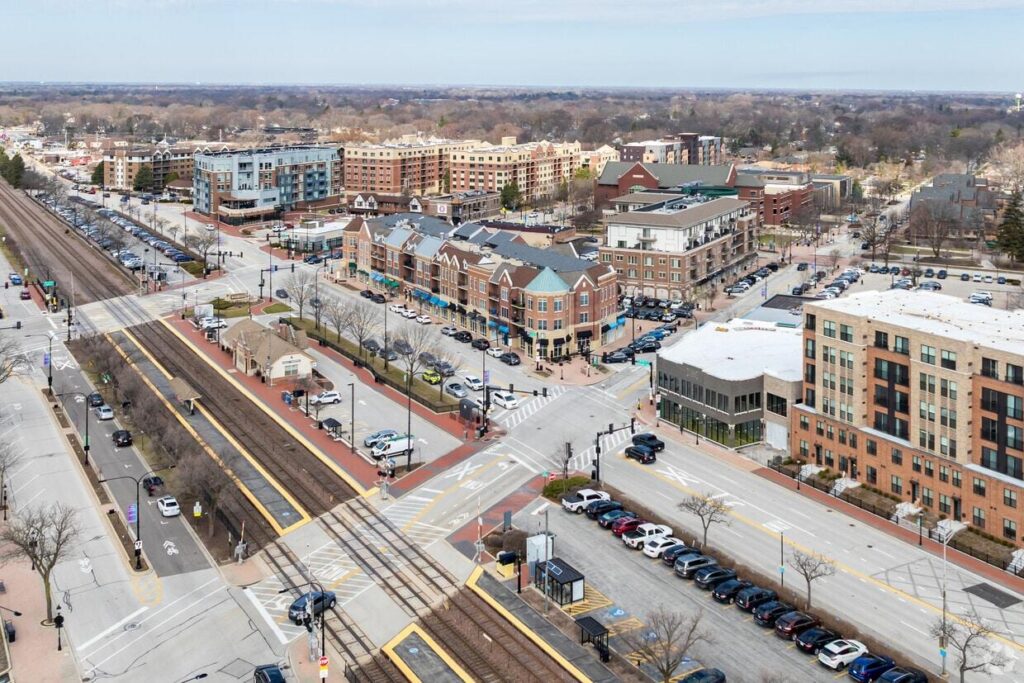
Once you have a shortlist, research the neighborhoods and properties within each area.
Review comparable sales, actual rental listings, property condition, taxes, insurance, zoning, flood exposure, transportation access, and planned development. Where possible, confirm important information with local records or professionals familiar with the market.
A ZIP code can contain very different property types and neighborhood conditions. Broad statistics should not substitute for property-specific due diligence.
Also consider whether the apparent trend is already reflected in asking prices. If buyers have already paid a premium for expected growth, the remaining investment opportunity may be limited.
Step 9: Analyze the Property Before Investing
Market research helps you decide where to look. Property-level financial analysis helps you decide whether to buy.
For rental properties, estimate achievable rent, vacancy, operating expenses, maintenance, capital expenditures, financing costs, and taxes. Calculate the returns relevant to your strategy and test more conservative assumptions.
For renovation and resale projects, evaluate acquisition costs, renovation budgets, contingency allowances, carrying costs, resale expenses, and a supportable after-repair value.
Ask yourself:
- Does the property make financial sense at today’s purchase price?
- Can the expected income support the expenses and financing?
- What happens if rents or resale values grow more slowly than expected?
- Can the investment tolerate vacancies, unexpected repairs, or delays?
- Does the projected return compensate for the risks?
A trending location can still contain poor investments. Do not depend on future appreciation to make an otherwise weak deal work.
Common Mistakes When Finding Trending Locations
Relying on one metric. Population growth or appreciation alone does not establish strong demand or profitable investment conditions.
Using inconsistent data. Different years, geographies, and definitions can make a comparison unreliable.
Assuming ZIP codes represent uniform neighborhoods. Large ZIP-code areas may include multiple submarkets with different property values, demand, and risks.
Ignoring housing supply. Population and employment growth can be offset by substantial new construction or competing rental inventory.
Confusing asking prices with completed sales. Listing prices show what sellers hope to receive, not necessarily what buyers have paid.
Assuming historical appreciation will continue. Market conditions, affordability, financing, taxes, and supply can change.
Skipping property-level underwriting. Even a promising location cannot guarantee that a particular property will meet your investment goals.
Frequently Asked Questions
How do I find trending real estate locations?
Start by defining the markets you want to compare. Review population, household growth, employment, income, home values, rental demand, housing supply, and verified development activity. Use consistent data and investigate the strongest candidates more closely.
Can I use ZIP codes to compare real estate markets?
Yes, as a screening method. However, mailing ZIP codes and Census ZIP Code Tabulation Areas are not always identical, and ZIP codes may contain different neighborhood types. Confirm the geography used by each data source and supplement broad statistics with local property research.
What is the best indicator of a trending real estate market?
There is no single best indicator. Multiple independent signals—such as household demand, employment trends, comparable sales, rental activity, and manageable housing supply—provide a stronger basis for further investigation.
Does population growth guarantee housing demand?
No. Population growth can support housing demand, but household formation, affordability, employment, housing construction, and local preferences all influence the outcome.
How often should I update my market spreadsheet?
Review the spreadsheet whenever meaningful new data becomes available and before making an investment decision. Some data is updated monthly or quarterly, while demographic estimates and other sources may be released annually or less frequently. Record the reporting period so older figures are not mistaken for current conditions.
Turn Location Research Into an Investment Decision
Finding a trending location is the beginning of the investment process. The next step is determining whether a specific property can meet your financial objectives after accounting for income, expenses, financing, renovation needs, and risk.
InvestingTE offers real estate investment calculators to help investors organize assumptions, evaluate property economics, and compare potential deals.
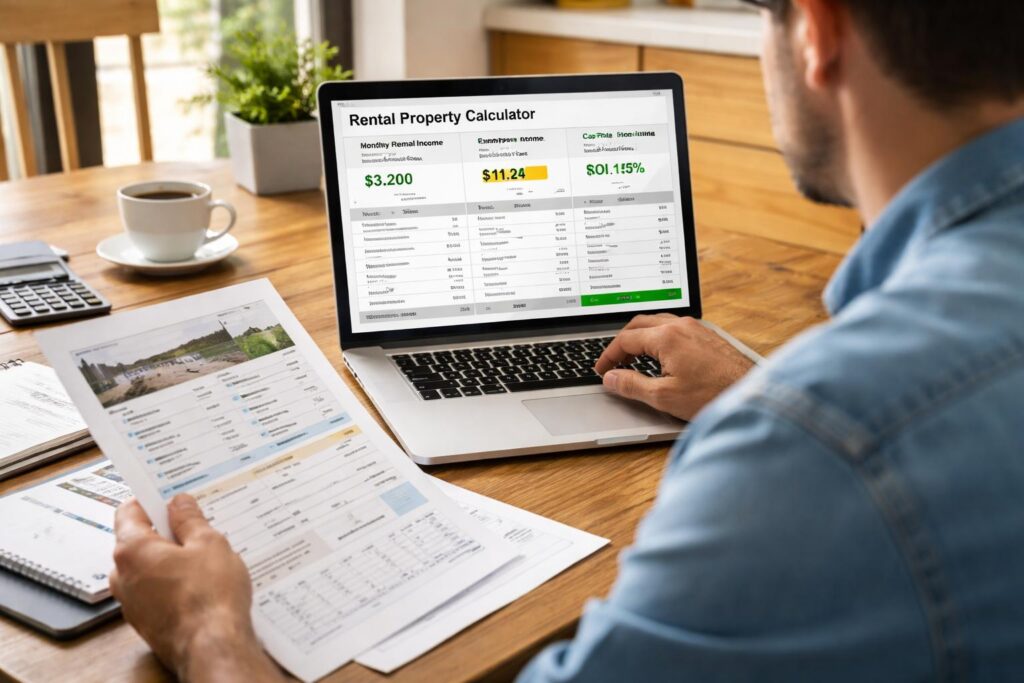
Explore InvestingTE’s real estate investment calculators to move from location research to property-level analysis.
FREE Deal Analysis for Rental Property Calculator!
Our mission is to help others develop using our tools and educational information.
Explore our tools, education and services.