
Sub-Total: $0.00
How to Evaluate Emerging Markets in Real Estate

Identifying an emerging real estate market can help investors discover locations worth researching before changing economic conditions become widely reflected in property prices. However, a growing population or a major employer announcement does not automatically make a market a good investment.
The goal is to determine whether a location is experiencing sustainable economic and housing demand, whether property prices are reasonable relative to that demand, and whether an individual investment can meet your financial objectives.
In this guide, you’ll learn how to evaluate emerging real estate markets using population trends, household income, employment, property values, housing supply, rental demand, and other important indicators. You’ll also discover where to find reliable data and how to turn your research into a practical investment decision.
Learn more with our article How to Identify a Path of Progress in Real Estate Investing.
What Is an Emerging Real Estate Market?
An emerging real estate market is a location where economic activity, employment, population, infrastructure, or housing demand may be improving in ways that could create future property investment opportunities.
Emerging markets can include growing suburbs, smaller cities attracting new employers, established neighborhoods undergoing redevelopment, or communities experiencing renewed housing demand.
The key is to distinguish genuine improvement from temporary attention. A market can have strong population growth but also have excessive new construction, weak wage growth, high property taxes, or purchase prices that already reflect optimistic expectations.
An emerging market is not necessarily the fastest-growing city. It is a market where the evidence, pricing, and potential investment returns justify further investigation.
1. Analyze Population Growth and Household Formation
Population growth can indicate increasing demand for housing, retail, services, and other local amenities. However, total population alone does not tell the entire story.
Evaluate population estimates over several years and compare the target location with its county, metropolitan area, and relevant peer markets.
Look for:
- Consistent population growth rather than a single-year increase.
- Net migration that suggests people are moving into the area.
- Growth in the number of households.
- Changes in household size and age distribution.
- Whether new residents are likely to rent, buy homes, or require different housing types.
Household formation matters because housing demand depends not only on how many people live in an area but also on how many separate households need housing.
Where to find the data: Start with the U.S. Census Bureau at Census.gov. Use population estimates, American Community Survey data, and other appropriate demographic datasets. Check the geography, release year, and margin of error before comparing figures.
Do not apply a universal population-growth threshold to every city. A small community and a large metropolitan area can have very different growth patterns and investment characteristics.
2. Evaluate Household Income and Affordability
Income trends help investors assess whether local households have the financial capacity to support housing costs, rents, and consumer spending.
Review median household income, wage trends, employment opportunities, and housing affordability. Where possible, distinguish changes in nominal income from changes in purchasing power after inflation.
Consider these questions:
- Is household income increasing over time?
- Are wages growing across multiple industries or only within one sector?
- How do typical local rents compare with household income?
- Are home prices becoming less affordable relative to local earnings?
- Can the local workforce afford the types of homes being built?
Rising income can support housing demand, but income growth alone does not guarantee property appreciation. If housing costs rise faster than earnings, affordability may deteriorate and limit the pool of potential buyers or tenants.
Where to find the data: Use Census Bureau income tables and American Community Survey estimates. The Bureau of Labor Statistics can provide additional wage and employment information.
Compare similar geographies and time periods. Avoid drawing conclusions from income figures that use different definitions or survey years.
3. Study Employment Growth and Economic Diversity

Employment is an important component of housing demand. Growing employers may attract workers, support local businesses, and increase demand for rental housing and owner-occupied homes.
Look beyond announcements about large corporations. Evaluate whether employment is actually increasing, whether the jobs are likely to be sustained, and whether workers’ wages support the local cost of housing.
Research:
- Total employment and unemployment trends.
- Wage growth and the types of jobs being created.
- Industry diversity and dependence on major employers.
- Announced employer expansions and verified project progress.
- Workforce availability, commuting patterns, and access to training.
- The stability of industries supporting the local economy.
A market supported by several durable industries may be less exposed to a downturn in one sector than a market heavily dependent on a single employer.
When a new employer announces a project, confirm the number of expected jobs, compensation where available, project timeline, funding, and whether the jobs are new to the area. Proposed projects can be delayed, reduced, or canceled.
Where to find the data: Use the U.S. Bureau of Labor Statistics at BLS.gov, state labor-market information, local economic-development agencies, and official employer announcements.
4. Analyze Home Values and Comparable Sales
Property-value trends can help reveal changes in buyer demand, but appreciation should be interpreted carefully.
Research recent sales of comparable properties and examine trends across multiple years. Whenever possible, compare similar property types, locations, sizes, and conditions.
Consider:
- Median sale prices and price per square foot.
- The number of completed transactions.
- Days on market and changes in inventory.
- Price reductions and seller concessions.
- Differences between asking prices and completed sales.
- Whether price growth is broad-based or concentrated in a few neighborhoods.
Rising median prices can sometimes reflect a change in the mix of homes being sold rather than appreciation of comparable properties. For example, an increase in luxury-home sales may raise a market’s median price even if typical homes have not increased in value at the same rate.
Also distinguish nominal appreciation from inflation-adjusted appreciation. A property value increase over a long period may look substantial in dollar terms but represent a smaller gain after inflation and transaction costs.
Where to find the data: Use reliable local sales records, county property records, and reputable market reports. Check the date, sample size, property type, and methodology before comparing markets.
Do not assume that historical appreciation will continue or that a growing market will produce the same return for every property.
Learn more with our article How to Find Trending Real Estate Locations in Real Estate.
5. Evaluate Rental Demand and Housing Supply
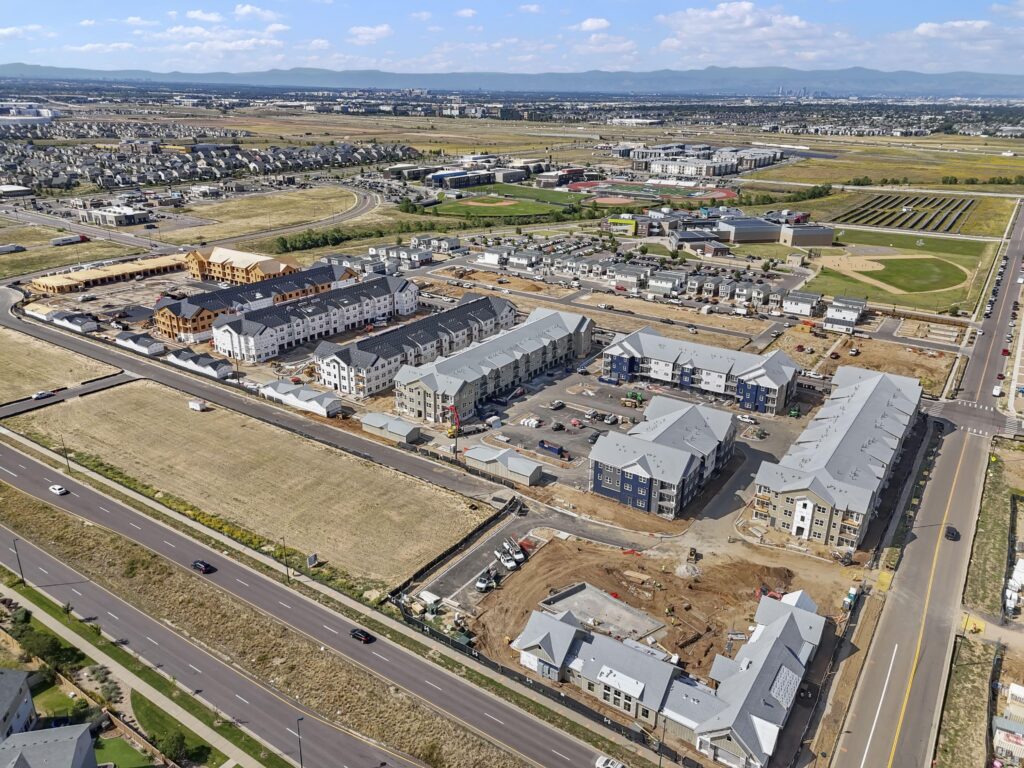
For rental-property investors, a market’s ability to support sustainable rents and occupancy is especially important.
A growing population can support rental demand, but the outcome depends on household income, tenant preferences, competing properties, housing construction, and the number of available rental units.
Research:
- Achieved rents for comparable properties.
- Vacancy estimates and leasing activity.
- Days on market for available rentals.
- New apartment and single-family rental construction.
- Competing properties and concessions offered by landlords.
- The relationship between local wages and rents.
- Demand for the property type you intend to purchase.
Asking rents do not necessarily equal collected rents. Similarly, low advertised vacancy may not represent the entire market.
Investigate planned and active construction projects. New housing can meet unmet demand, but a large wave of supply may also create competition, slower leasing, or pressure on rents.
For investors considering long-term rentals, compare realistic income with operating expenses, maintenance, capital expenditures, financing costs, and vacancy assumptions before deciding whether the market supports your strategy.
6. Research Infrastructure and Development Plans
Infrastructure improvements and development projects may change accessibility, employment patterns, and the types of housing a community can support.
Potential signals include:
- Funded road and transportation improvements.
- Public transit investments.
- Water, sewer, and utility capacity expansions.
- Approved residential or mixed-use developments.
- Redevelopment of vacant commercial properties.
- Adopted zoning changes that permit additional housing.
- Public investment in streets, sidewalks, and community facilities.
Verify the status of each project. A concept plan, public announcement, funded project, and completed improvement are not equivalent.
Review local planning documents, adopted capital-improvement plans, zoning ordinances, permit records, and official project schedules. Consider which properties are likely to benefit and whether that benefit is already reflected in the purchase price.
7. Understand Neighborhood Conditions and Public Safety
Market-level averages can conceal significant differences between neighborhoods. Investors should investigate the specific area and property rather than assuming that all parts of a city share the same conditions.
Review available, reliable information about property maintenance, transportation access, public services, environmental conditions, and reported public-safety trends.
When evaluating crime statistics, check how the data is defined, the period covered, the geographic area, and whether reporting practices have changed. A single index or citywide figure may not represent the block where a property is located.
Use objective, relevant evidence and avoid relying on stereotypes or demographic composition as a proxy for investment quality. Neighborhood conditions can change, and market data should be supplemented by property-specific due diligence.
8. Compare Property Taxes, Insurance, and Operating Costs
A market may be growing while property-level expenses reduce the return available to investors.
Review current property taxes, assessment practices, insurance availability, maintenance costs, utility expenses, and any applicable association fees. Consider whether a purchase or renovation could trigger reassessment or higher insurance costs.
For properties exposed to flooding or other environmental hazards, investigate the specific parcel rather than relying only on the area’s reputation.
Higher rents and sale prices do not necessarily produce better returns if acquisition costs, taxes, insurance, repairs, or financing costs rise at the same time.
9. Compare the Market With Similar Locations
Evaluating one market in isolation can lead to misleading conclusions. Compare it with several relevant alternatives using consistent definitions and time periods.
Build a comparison table containing:
- Population and household growth.
- Income and employment trends.
- Recent comparable property sales.
- Rental demand and competing supply.
- Purchase prices and operating costs.
- Infrastructure and development status.
- Local taxes, insurance considerations, and physical risks.
- Expected property-level cash flow and investment returns.
A slower-growing market may offer better investment economics if purchase prices are lower, rental demand is stable, and operating expenses are manageable. A rapidly growing market may be less attractive if investors must pay a premium that leaves little room for error.
Learn more with our article How to Analyze a Rental Property.
The best market depends on your investment strategy, financing, risk tolerance, holding period, and exit plan.
10. Underwrite the Individual Property
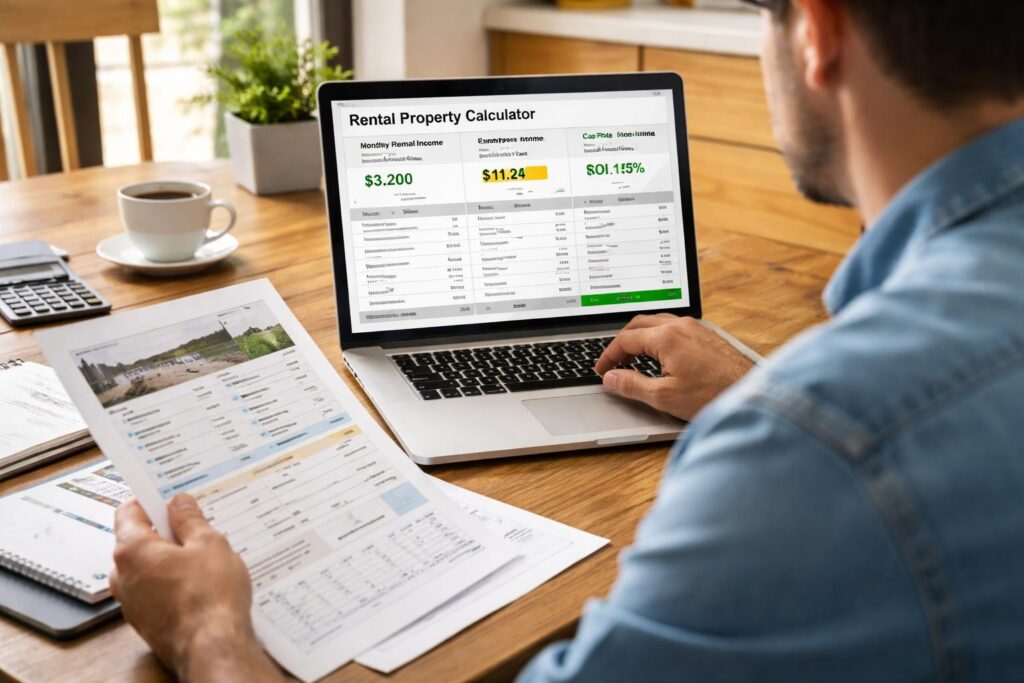
Market research helps identify locations worth considering. It does not replace the financial analysis of the property itself.
For a rental property, estimate realistic rent, vacancy, operating expenses, maintenance, capital expenditures, financing costs, and taxes. Evaluate cash flow and other metrics relevant to your strategy.
For a renovation or flip, estimate the purchase price, renovation scope, contingency allowance, carrying costs, resale costs, and a conservative after-repair value supported by comparable sales.
Test less favorable scenarios. What happens if the property takes longer to lease, renovation costs rise, rent growth slows, interest rates change, or the resale price is lower than expected?
A strong market cannot automatically rescue a poorly purchased property. Your investment should make sense under reasonable assumptions rather than depending entirely on future appreciation.
Learn more with our article How to Calculate Rental Property Cash Flow.
Free Resources for Evaluating Emerging Real Estate Markets
Use primary sources whenever possible, and record the date and geography of the data you collect.
- U.S. Census Bureau — Census.gov: Population estimates, household information, demographic trends, and income estimates.
- U.S. Bureau of Labor Statistics — BLS.gov: Employment, wages, unemployment, and industry information.
- Local planning and zoning departments: Zoning ordinances, development applications, permits, and planning documents.
- County and municipal records: Property assessments, tax information, permits, and public improvement plans.
- State and local economic-development agencies: Employer announcements, investment projects, and workforce information.
- FEMA Flood Map Service Center: Flood-map information for property due diligence.
- Reliable local real estate market data: Comparable sales, rental listings, inventory, and transaction trends.
Free sources are a practical starting point, but no single website provides a complete or perfectly current view of a market. Cross-check important figures and confirm that different sources use comparable definitions.
Emerging Real Estate Market Evaluation Checklist
Before investing in a market, confirm that you have:
- Reviewed multi-year population and household trends.
- Compared income and employment trends with housing costs.
- Evaluated the diversity and stability of the local economy.
- Checked comparable property sales and current inventory.
- Researched achievable rents, vacancy, and competing supply.
- Verified major development and infrastructure projects.
- Investigated neighborhood and property-specific risks.
- Estimated taxes, insurance, maintenance, and capital expenditures.
- Compared the market with credible alternatives.
- Underwritten the individual property under conservative assumptions.
If important information is missing or contradictory, continue researching before making a commitment.
Frequently Asked Questions
What makes a real estate market an emerging market?
An emerging real estate market shows evidence of improving economic activity, housing demand, infrastructure, or development. Investors should verify these trends and determine whether property prices and expected returns justify the risks.
What is the most important indicator of an emerging real estate market?
There is no single best indicator. Population and household growth, employment, income, housing supply, rental demand, and property values should be considered together. Their relative importance depends on the type of investment.
How much population growth is needed for a market to be considered emerging?
There is no universal threshold. Compare growth rates with similar markets, review the length and reliability of the data, and determine whether the additional population translates into demand for the property types you are considering.
Does rising home value mean a market is a good investment?
Not necessarily. Rising values may reflect demand, limited supply, changes in the mix of properties sold, or expectations already reflected in asking prices. Investors should evaluate purchase price, operating costs, rental income, financing, and downside risk.
How do I find emerging real estate markets for rental properties?
Start with employment and household trends, then research achievable rents, vacancy, competing supply, property taxes, insurance, and acquisition costs. Use the resulting market analysis to identify properties that meet your financial criteria.
Are emerging markets riskier than established markets?
They can be, particularly when market data is limited, local employment is concentrated, development depends on uncompleted projects, or resale demand is uncertain. Emerging markets are not inherently better or worse; the relevant question is whether the potential return adequately compensates for the risks.
Turn Market Research Into a Property-Level Decision
Identifying a market with promising trends is only the first step. The next step is to determine whether a specific property can deliver the income, cash flow, or resale potential you need.
InvestingTE provides real estate investment calculators designed to help investors organize assumptions, analyze property economics, and compare potential deals.
Explore InvestingTE’s real estate investment calculators to take the next step from market research to property analysis.
FREE Deal Analysis for Rental Property Calculator!
Our mission is to help others develop using our tools and educational information.
Explore our tools, education and services.