
Sub-Total: $0.00
How to Identify a Path of Progress in Real Estate Investing
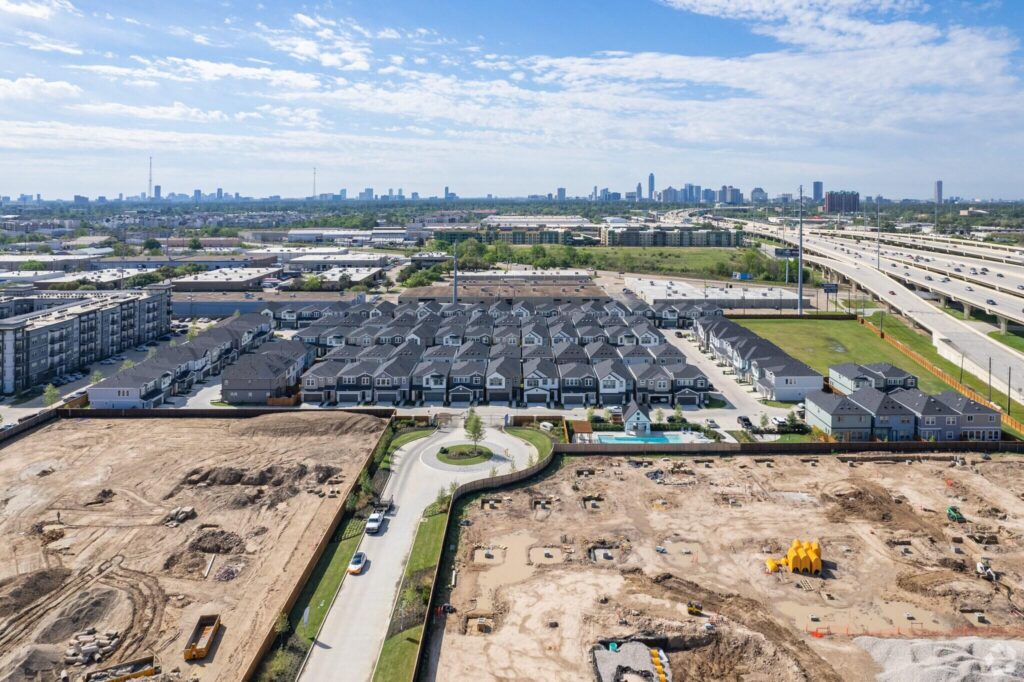
A path of progress in real estate investing is an area or corridor where employment, infrastructure, population, business activity, and housing development may be creating new demand for property. Investors study these patterns to identify markets worth researching before growth becomes widely recognized.
However, growth indicators are not guarantees of higher property values or investment returns. A new employer, highway project, or shopping center may attract attention, but the opportunity depends on whether the project is completed, whether people need housing nearby, and whether property prices already reflect the anticipated growth.
The objective is not to predict the future with certainty. It is to identify promising locations, verify the evidence, evaluate the risks, and determine whether an individual property makes financial sense.
What Does “Path of Progress” Mean in Real Estate?
A path of progress is a geographic area where economic activity, infrastructure investment, new construction, or redevelopment appears to be expanding. It can follow an existing transportation corridor, extend outward from an established employment center, or emerge around a revitalizing downtown.
For example, a community may announce a major employer expansion. That expansion could create jobs, attract workers, support nearby businesses, and increase demand for housing. If the trend is sustained and housing supply does not fully meet demand, certain neighborhoods may experience stronger rental demand or property-value growth.
The sequence is not automatic. Some projects are delayed, jobs may not materialize as expected, and new housing construction may absorb additional demand. Investors should treat a path of progress as a research framework—not a promise of appreciation.
30 Signs That May Help Identify a Path of Progress
No single indicator is enough to establish that an area is a strong investment market. Look for multiple independent signals that support the same conclusion.
Employment and Economic Growth
1. Major employers opening or expanding
Research announced corporate relocations, facility expansions, and new operations. Confirm the project status, expected employment, timeline, and location using company announcements and local economic-development sources.
2. Sustained job growth
Compare employment trends over several years rather than relying on one announcement. Growing employment can support housing demand, but the types of jobs and wages matter.
3. Diverse employment opportunities
A market supported by several industries may be less dependent on one employer. Investigate whether employment is concentrated in a single industry or spread across healthcare, education, manufacturing, logistics, technology, and other sectors.
4. Business openings and expansions
New businesses may indicate confidence in local demand. Determine whether openings are part of a sustained trend or isolated events.
Learn a more descriptive process of How to Evaluate Emerging Real Estate Markets with this helpful article.
5. Business retention and reinvestment
Existing employers expanding operations or committing to remain in the area may provide useful context about the local economy.
Population and Housing Demand

6. Sustained population growth
Review recent population estimates and longer-term trends. Determine whether growth is occurring throughout the municipality or concentrated in specific neighborhoods.
7. Household formation
More households can increase housing needs, even when population growth is modest. Compare household trends with available housing inventory.
8. Net migration into the area
Investigate whether more people are moving into the region than leaving it, and consider the reasons for those moves.
9. Rental demand
Review comparable rents, leasing activity, vacancy estimates, and the time properties spend on the market. Strong asking rents alone do not prove strong tenant demand.
10. Housing supply and development activity
Compare the number of existing homes, proposed projects, approved developments, and homes under construction with local demand. Excessive new supply can limit rent growth and appreciation.
Learn a more descriptive process of How to Analyze a Rental Property with this helpful article.
Infrastructure and Accessibility
11. Funded transportation projects
Review approved road improvements, transit investments, bridge replacements, and other transportation projects. Verify funding and schedules rather than relying exclusively on proposals or press coverage.
12. Improved access to employment centers
Measure practical travel times to major job centers during relevant commuting periods. A project may improve access, but the impact depends on the route, travel patterns, and actual completion.
13. Public transportation improvements
New or improved transit service may make some locations more accessible to workers and residents. Check service frequency, station locations, funding, and ridership where available.
14. Water, sewer, and utility capacity
Infrastructure capacity can influence where additional housing and commercial development can occur. Consult municipal planning and utility sources.
15. Public infrastructure investment
Look at planned and completed improvements to streets, sidewalks, public spaces, drainage, and other local infrastructure. Evaluate the specific project and the area it serves.
Commercial and Retail Activity
16. New grocery stores and essential retailers
New grocery stores or other essential services may reflect demand from residents. They are supporting evidence, not proof that nearby property values will rise.
17. Retail and service expansion
Restaurants, pharmacies, childcare providers, and other services can help illustrate how local amenities are changing.
18. Commercial occupancy and leasing activity
Research whether commercial spaces are being occupied, rents are sustainable, and new businesses are replacing vacancies.
19. Investment by established businesses
A company’s decision to enter a market may reflect research into customers, workforce, logistics, or costs. Investigate the underlying reasons instead of assuming that the brand name itself validates the location.
20. Redevelopment of underused commercial property
Former retail centers, vacant buildings, and underused sites may become new sources of activity if redevelopment plans are financially viable and receive necessary approvals.
Construction, Planning, and Redevelopment
21. Building permit trends
Track residential and commercial permits over time. Permits can reveal where development is planned, but they do not guarantee that construction will be completed.
22. Approved residential developments
Examine project size, expected unit counts, affordability, construction schedules, and the likelihood of completion.
23. Zoning changes
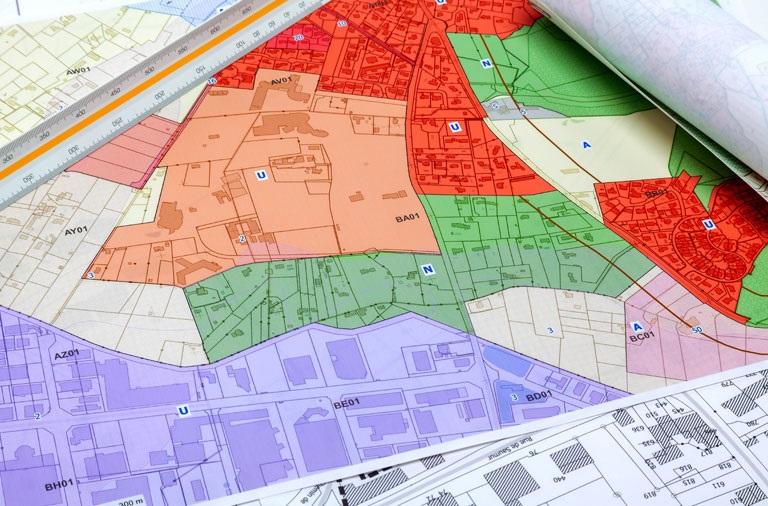
Changes that permit additional housing or mixed-use development can alter a location’s future possibilities. Verify the adopted ordinance, permitted uses, density limits, and remaining approval requirements.
24. Downtown revitalization
Evaluate specific investments in buildings, public spaces, businesses, and housing. Distinguish completed improvements from aspirational plans.
25. Public-private development partnerships
Partnerships may support redevelopment, but investors should examine funding commitments, approvals, project economics, and implementation schedules.
Real Estate Market and Risk Indicators
26. Comparable property sales
Compare recent sales of similar properties in the same submarket. Account for condition, size, location, property type, and concessions rather than relying on broad regional averages.
27. Sustainable rent and occupancy trends
Review achieved rents and credible vacancy information. Test whether the numbers support the property’s expenses, debt service, and required return.
28. Property tax and insurance costs
Research current assessments, applicable tax rates, likely reassessment exposure, insurance availability, and property-specific risk. Higher operating costs can offset market growth.
29. Environmental and physical constraints
Investigate flood exposure, stormwater management, contamination concerns, topography, and other site-specific limitations. A growing corridor may still contain properties with substantial risks.
30. Multiple indicators moving in the same direction
The strongest research case is supported by several independent sources: employment trends, household demand, approved development, infrastructure investment, and property-level financial analysis. When evidence conflicts, investigate why before committing capital.
How to Research a Potential Path of Progress
Use a repeatable process instead of relying on headlines, popular opinion, or a list of recognizable brands.
Step 1: Define the market and investment strategy
Specify the city, neighborhood, or corridor you want to evaluate. Decide whether you’re considering long-term rentals, a renovation project, multifamily housing, or another strategy. Each requires different demand and financial assumptions.
Step 2: Verify economic and demographic trends
Use official employment and population data to assess whether the local economy and number of households are growing. Review several years where possible, and compare the target area with the wider region.
Step 3: Confirm proposed development
Consult municipal planning documents, zoning records, permit data, adopted capital-improvement plans, and official project announcements. Record whether each project is proposed, approved, funded, under construction, or completed.
Step 4: Test housing demand against supply
Review comparable rents and sales, vacancy information, construction activity, and competing properties. Ask whether new housing supply could satisfy demand before your investment reaches stabilization.
Step 5: Underwrite the individual property
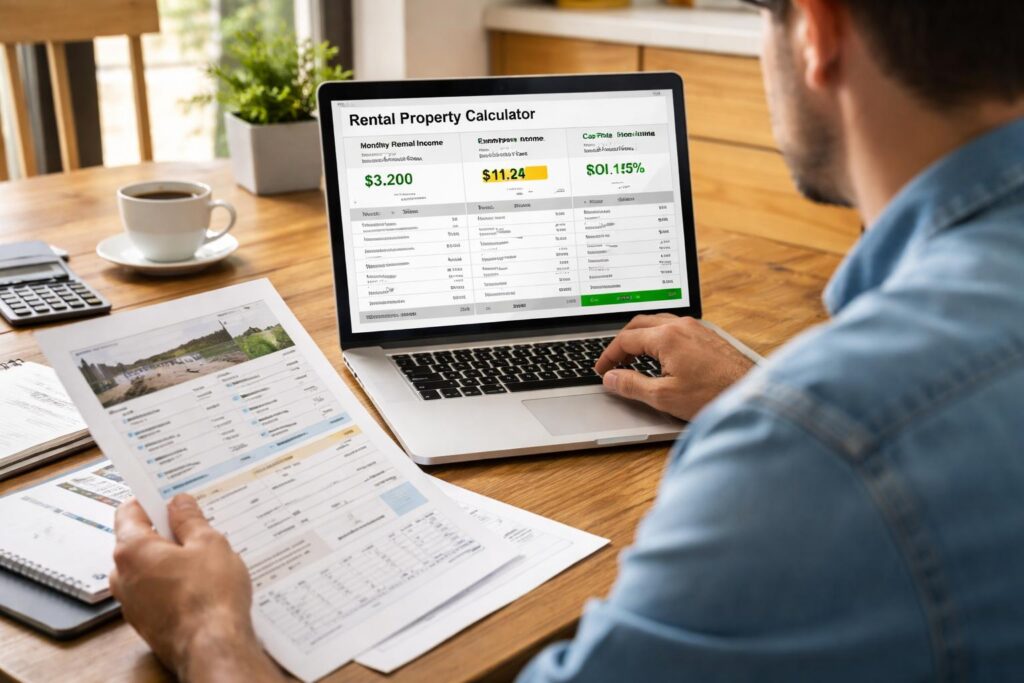
Estimate realistic income, vacancy, operating expenses, maintenance, capital expenditures, financing, and closing costs. Model conservative assumptions and test whether the property still meets your investment criteria if rent growth or appreciation is weaker than expected.
Explore real estate investment calculators to help you evaluate potential opportunities.
Step 6: Establish a monitoring plan
Track key indicators quarterly or whenever meaningful new information becomes available. Update the analysis when project schedules, employment conditions, financing costs, taxes, insurance, or market rents change.
Learn a more descriptive process of How to Calculate Rental Property Cash Flow with this helpful article.
Where to Find Reliable Information
Start with primary sources and verify material claims independently.
- U.S. Census Bureau: Population, household, and demographic estimates.
- U.S. Bureau of Labor Statistics: Employment, unemployment, and industry information.
- Local planning and zoning departments: Permitted uses, proposed development, zoning changes, and planning documents.
- Municipal and county records: Property taxes, assessments, permits, public budgets, and capital-improvement plans.
- State and local economic-development agencies: Employer announcements, project details, and workforce initiatives.
- FEMA Flood Map Service Center: Flood-map information for property due diligence.
- Local market data and comparable sales: Evidence about actual sale prices, rents, vacancy, and competing supply.
- U.S. Department of Housing and Urban Development: Housing related resources.
Treat forecasts and announcements as evidence to investigate, not as established outcomes. Record the source and date of important figures so your assumptions can be revisited.
Common Mistakes When Following a Path of Progress
Assuming a major company guarantees appreciation. A new business may create jobs, but housing demand depends on the number and type of jobs, wages, commuting patterns, and the supply of competing homes.
Buying based on an uncompleted project. Proposed roads, transit lines, and developments may be delayed, changed, or canceled. Verify approvals, funding, and schedules.
Overlooking the purchase price. An attractive market can still produce a poor investment if anticipated growth is already reflected in the asking price.
Confusing population growth with rental profitability. More residents do not automatically mean adequate rents, low vacancy, or positive cash flow for a particular property.
Ignoring property-specific risks. Taxes, insurance, deferred maintenance, environmental conditions, financing, and renovation costs can outweigh the benefits of a promising location.
Treating appreciation as a substitute for financial analysis. Evaluate the property’s current economics and test downside scenarios before relying on future growth.
Explore real estate investment calculators to support your research.
Frequently Asked Questions
What is a path of progress in real estate investing?
It is an area or corridor where economic activity, infrastructure, employment, and development may be expanding. Investors use these trends to identify locations for further research, but they do not guarantee property appreciation or profitable returns.
What is the strongest sign that an area may be growing?
There is no single best indicator. A stronger research case emerges when employment and household demand, verified development activity, infrastructure improvements, and housing-market evidence support one another.
Do new stores increase nearby property values?
New stores may improve access to amenities or signal demand, but their impact varies by location and market conditions. They should be evaluated alongside employment, housing supply, comparable sales, and the price of the property being considered.
Should I buy before a new development is completed?
Only after evaluating the uncertainty, purchase price, carrying costs, and downside risk. Confirm the project’s status and avoid depending on an unverified announcement to make the investment financially viable.
How can I evaluate a property in a growth corridor?
Research the local market, verify development and demographic data, review comparable sales and rents, investigate property-specific risks, and calculate expected returns using realistic assumptions. A promising area does not make every property in that area a good investment.
Turn Market Research Into a Better Investment Decision
Identifying a potential path of progress is the beginning of the process—not the final investment decision. The next step is to determine whether a specific property’s expected income, expenses, financing, renovation requirements, and risk profile align with your goals.
Use InvestingTE’s real estate investment calculators to organize your assumptions, compare scenarios, and evaluate a property before committing capital.
Explore the real estate investment calculators and choose the tool that fits your strategy.
FREE Deal Analysis for Rental Property Calculator!
Our mission is to help others develop using our tools and educational information.
Explore our tools, education and services.